
Rolex GMT-Master · Reference 6542 & 1675 · Collector History
Evolution of the GMT
From the 6542 to the late 1675 — a collector’s journey
Much like the first girl you kiss or your first car, one’s first Vintage Rolex will linger in the memory, no matter where one’s subsequent collecting interests may lead. For me, that “first” was a 1675 GMT-Master. It was a matte dialed, thin case model from the late 1960s. When I saw it, I knew I had to have it. It was great. Pepsi bezel. My first Rolex Sports watch and vintage, too! Set for life…
And then, I saw this baby:

1_med_hr.jpeg
Rolex GMT-Master Reference 6542 — the “Pussy Galore”
Era I · Reference 6542 · c. 1954–1959
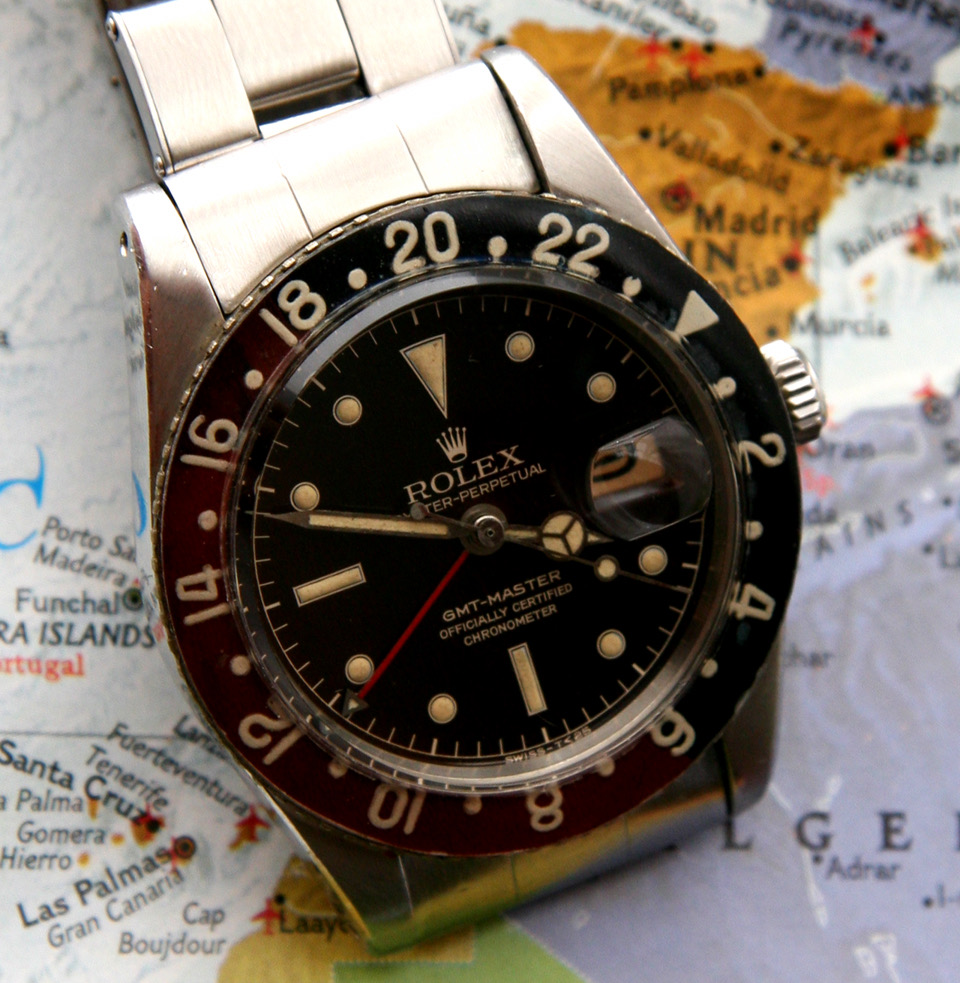
The 6542 — “Pussy Galore!” I didn’t know that it was called that then. Heck, I hadn’t even become a regular on any forums yet and didn’t really know much about no-crown-guards models or gilt vs. matte dials. But I did know that I really liked the look of the watch with that mini GMT hand and beautiful glossy “chocolate” dial. And that plastic bezel insert — Humina-humina…
2_med_hr.jpeg
6542 — gloss “chocolate” gilt dial & plastic Pepsi bezel insert
So I sold the matte dialed 1675 and, by the luckiest of coincidences, I was fortunate enough to purchase this 6542.
3_med_hr.jpeg
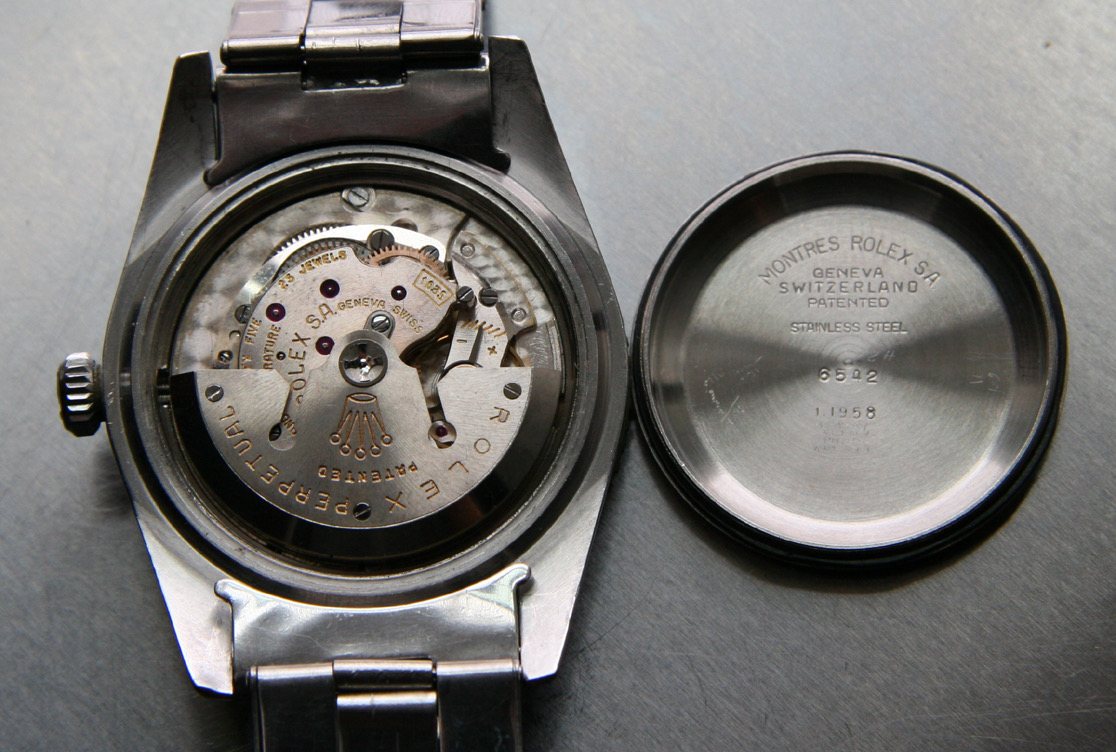
6542 movement — Calibre 1035 with decorated “butterfly” rotor
Reference
6542
Calibre
1035 / 1036 / 1066
Rotor
Decorated “butterfly” rotor
Crown Guards
None
Dial
Glossy gilt “chocolate” — mini GMT hand
Bezel Insert
Bakelite / plastic Pepsi (later screen-printed metal)
Example Date Stamp
1 1958
Example Serial Range
35x,xxx
Here is the beautiful movement, engraved with caliber ID “1035” (although I have read that Rolex called this GMT-specific caliber “1036” and later variations included “1066”), featuring a decorated “butterfly” rotor. This 6542 is stamped “1 1958” and has a case/serial # of 35x,xxx.
I was sure that this 6542 was the only GMT I would “need.” After all, when you have the rarest variety, who wants any other kind? Well, clearly I had not come to grips with the fact that I was rapidly becoming a vintage watch addict and “needed” to get examples of the other types of gilt/gloss GMTs out there.

4_med_hr.jpeg
1675 — first generation, pointed crown guards, gilt dial
Era II · Reference 1675 · Pointed Crown Guards · c. 1959–1965
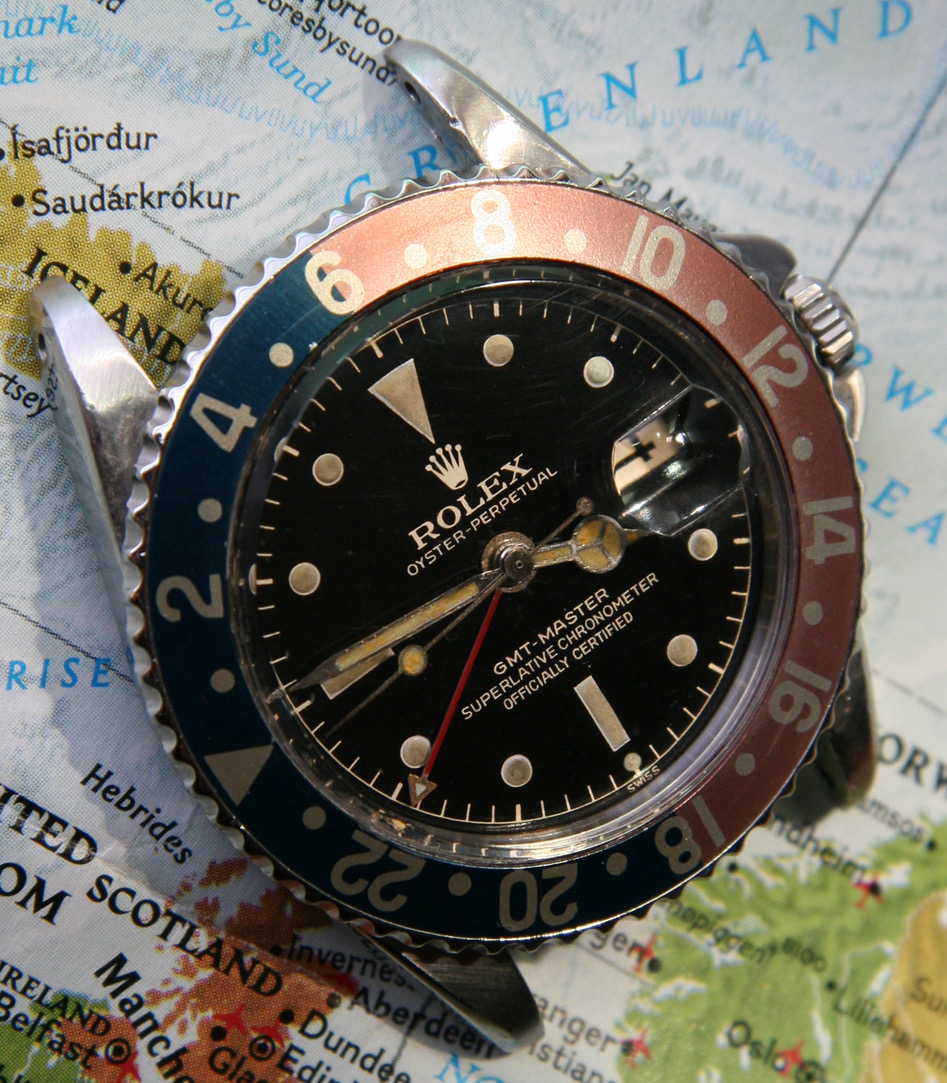
The next evolution of the GMT-Master incorporated pointed crown guards similar to those introduced on the Sub with the 5512 (ca. 1959–60) and did away with the plastic bezel insert in favor of a screen-printed metal insert, which had been phased in on the 6542.
5_med_hr.jpeg
1675 early — dial, pointed crown guards

6_med_hr.jpeg
Calibre 1565 — still decorated rotor
Reference
1675 (first generation)
Calibre
1565 — decorated rotor
Crown Guards
Pointed
Bezel Insert
Screen-printed metal Pepsi
Example Date Stamp
III 61
Example Serial Range
69x,xxx
This first generation of the newly designated model 1675 featured a new caliber as well — the 1565 — with a different style rotor, albeit still decorated. This example is date-stamped “III 61” and has a case/serial # of 69x,xxx.
That left me with one more gilt/gloss variety to acquire…
7_med_hr.jpeg
1675 — square crown guards era, thicker lacquer gilt dial
Era III · Reference 1675 · Square Crown Guards · c. 1965–1968
The next change in the model came about four years later with the crown guards becoming square and the disappearance of the outer minute track. The character of the gloss dial is also somewhat different — with what seems to me a thicker, shinier layer of lacquer.

8_med_hr.jpeg
1675 square CG — dial detail, no outer minute track

9_med_hr.jpeg
Calibre 1570/5 — undecorated, the Rolex workhorse for 25 years
Reference
1675 (square crown guards)
Calibre
1570/5 — undecorated rotor
Crown Guards
Square
Minute Track
Outer track removed
Dial Character
Thicker, shinier gloss lacquer
Example Date Stamp
II 65
Example Serial Range
1,30x,xxx
Movement Legacy
Workhorse for many Rolex models over 25 years
The movement was also upgraded to caliber 1570/5, which became the workhorse for many Rolex models over the next 25 years. Note that all extraneous decoration is put aside with the introduction of this movement. This square crown guards 1675 is date stamped “II 65” and has a case/serial # of 1,30x,xxx.
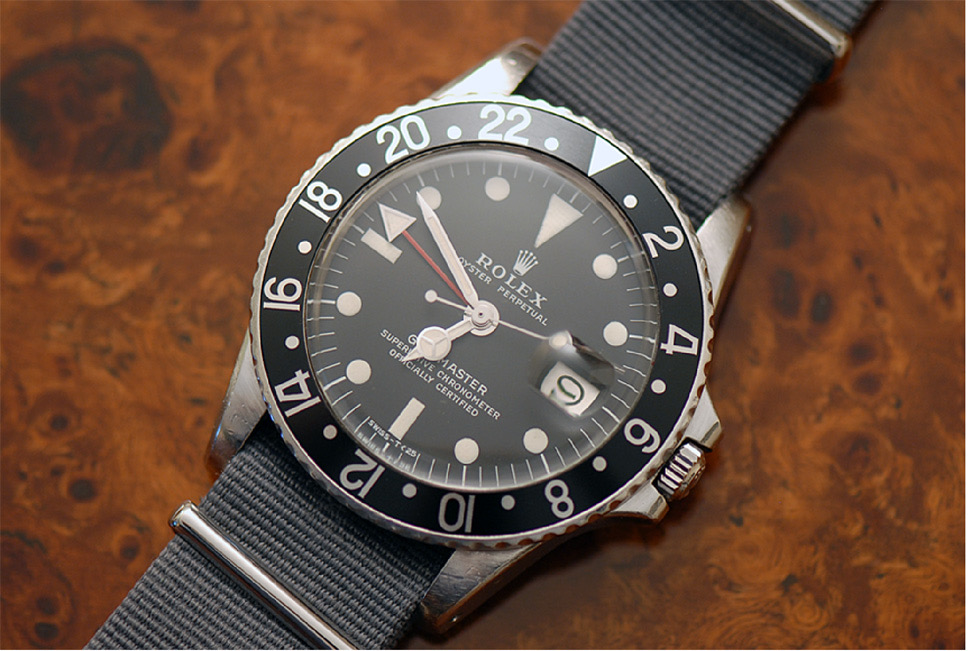
Era IV · Reference 1675 · Matte Dial · c. 1968–early 1980s
Finally, from around 1968 until the end of the 1675 reference (ca. early 1980s), the GMT-Master featured a matte dial with white printing and a large-arrow 24hr/GMT hand. From the early 1970s on, the customer could also choose between the original blue-red “Pepsi” bezel insert and a new, all-black version.
Photo: Felipe
13_med_hr.jpeg
Late 1675 — matte dial, white printing, large-arrow GMT hand · Photo: Felipe
Crown Sides, Bezels & Casebacks Compared
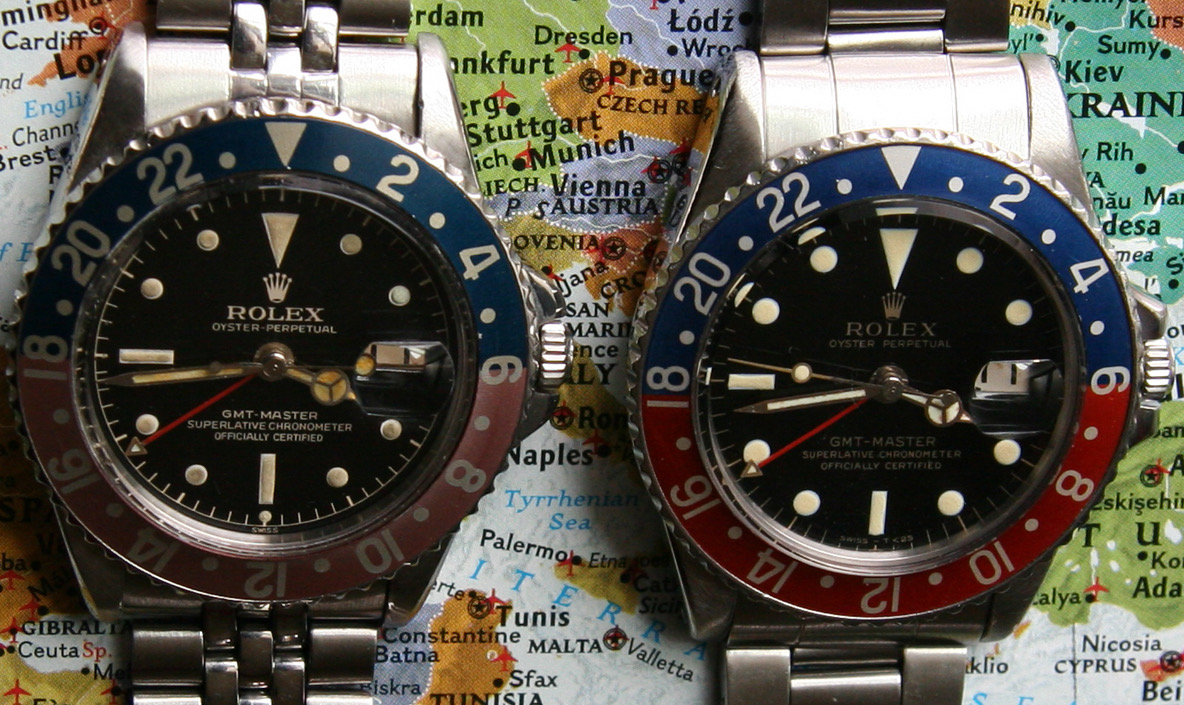
Here are the crown sides and bezels of these three versions of the GMT:

10_med_hr.jpeg
Crown sides & bezels — three GMT generations side by side
…and the case backs (note the big Bubbleback/early Sub style of the 6542 back on the left):

11_med_hr.jpeg
Casebacks — 6542 Bubbleback style (left) vs later 1675 variants
A First Love
After many years in the shadows of its more celebrated stable mate, the great Submariner, the GMT-Master — choice of test pilots, astronauts and world travelers — appears to me to be poised for its moment in the sun. It is one of the few affordable Vintage Rolex with multiple complications. It is a supremely practical tool watch with plenty of water resistance that can also tell home time when traveling abroad.
It had a date function more than a decade before the Submariner acquired one. The 6542 was also the first Sports Rolex (not counting 1950s pre-Daytona chronographs) to be manufactured in gold. And every GMT-Master manufactured has been a Certified Chronometer.
But the main significance for me is that the GMT-Master introduced me to this wonderfully complex and fascinating world of Vintage Rolex and the often very fine people who populate it. For that alone, the GMT-Master will always remain my first love.

12_med_hr-2.jpeg
Rolex GMT-Master — a timeless first love
GMT Reference Pages
Evolution of the GMT
GMT in Transition