
Rolex Daytona — Reference 16520 — 1988–2000
16520 Dials
In 1988, Rolex introduced a new model Daytona to the line up. This model replaced the not so popular and poorly selling (at the time) 6263/5 which were manual wind.
The new Daytona (16520) had a similar design but with some new improvements. The biggest improvement was the new 4030 self winding movement which was based on a zenith movement which oscillated at 36,000 beats per hour but regulated to 28,800 by Rolex. This provided Rolex with an incredible accurate chronograph which was also up to chronometer standards in a well tried and proven movement.
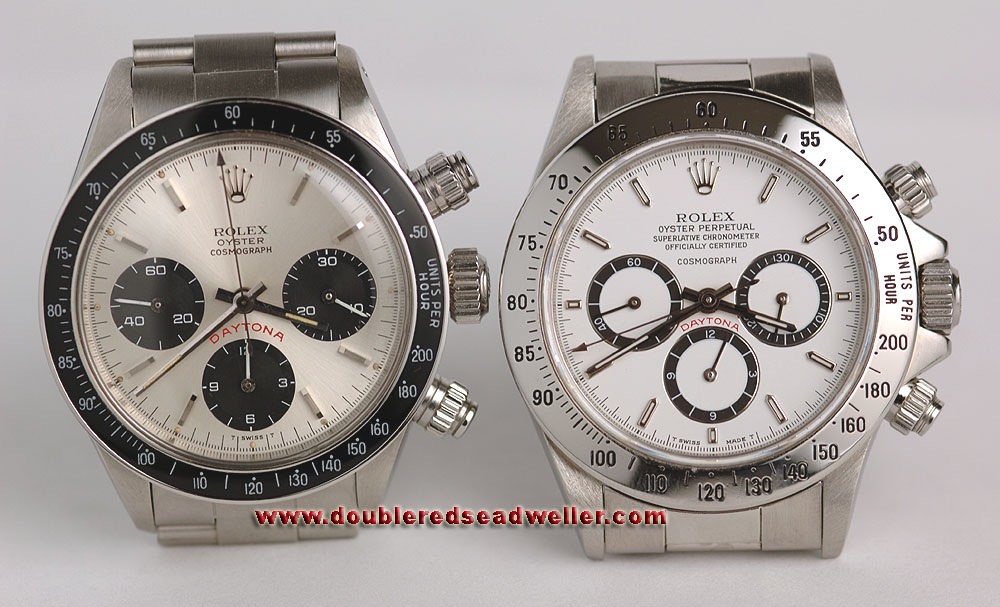
The other noticeable improvement was the new crown guards which was now very prominent and the new dial and subdial layout. The bezel was now only offered in steel.
This new attractive dial combination including the added bonus of a self winding movement was a big hit with Rolex customers and created a huge revival of the vintage Daytonas which were previously looked as a cumbersome and ugly.
Even today, the steel models are very sought after by collectors and enthusiasts and demand a large premium.
The Dials
There are five basic dials for the 16520.
Mark I
R Serial — 1988
L Serial — 1989
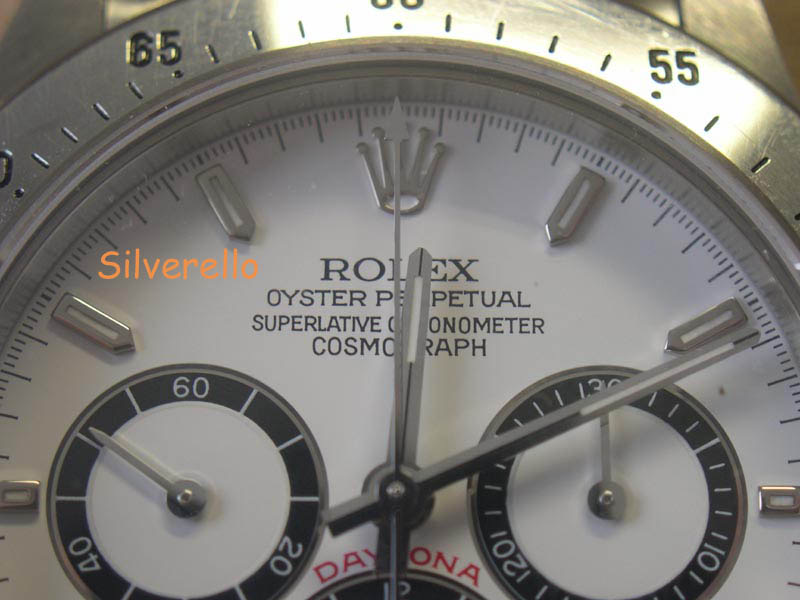
This is common in the early watches with serial starting with R (1988) and L (1989). This is one of the more desirable configurations with the word “Cosmograph” located lower in the dial or “Floating Cosmograph.” As a matter of fact, the whole text “ROLEX, Oyster Perpetual, Superlative Chronometer” is situated lower than the later dials.
The subdials use a rounded and smaller font.
The subdial at the six o’clock position (hour totalizer), the number six is inverted and appears as a “9” and not as the intended “6”. This “defect” appeared in dials as late as 1994–95.
The subdial at the three o’clock position (minute totalizer), had four “dash” markings between five minute markers as opposed to later dials which only had three “dash” marks.
This is a tritium dial and is labeled as “T SWISS T” at the six o’clock position. This dial configuration was made for about one year.
Cosmograph Position
Floating (lower on dial)
Subdial Font
Rounded, smaller
Hour Subdial (6 o’clock)
Inverted “6” reads as “9”
Minute Subdial Markers
Four dash marks between 5-min intervals
Luminous Material
Tritium — “T SWISS T”
Production Duration
Approximately one year
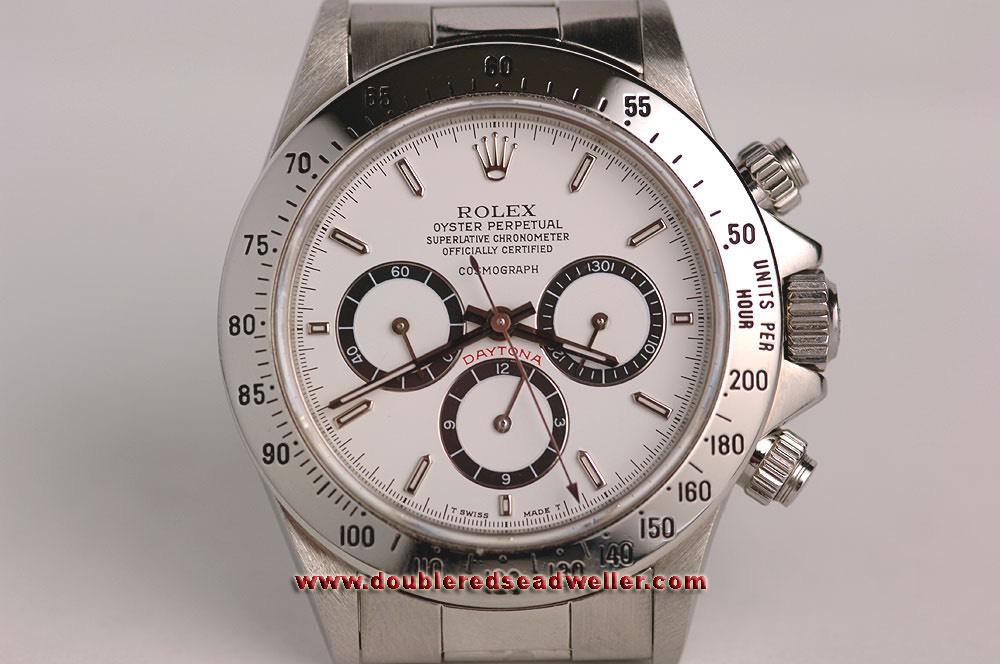

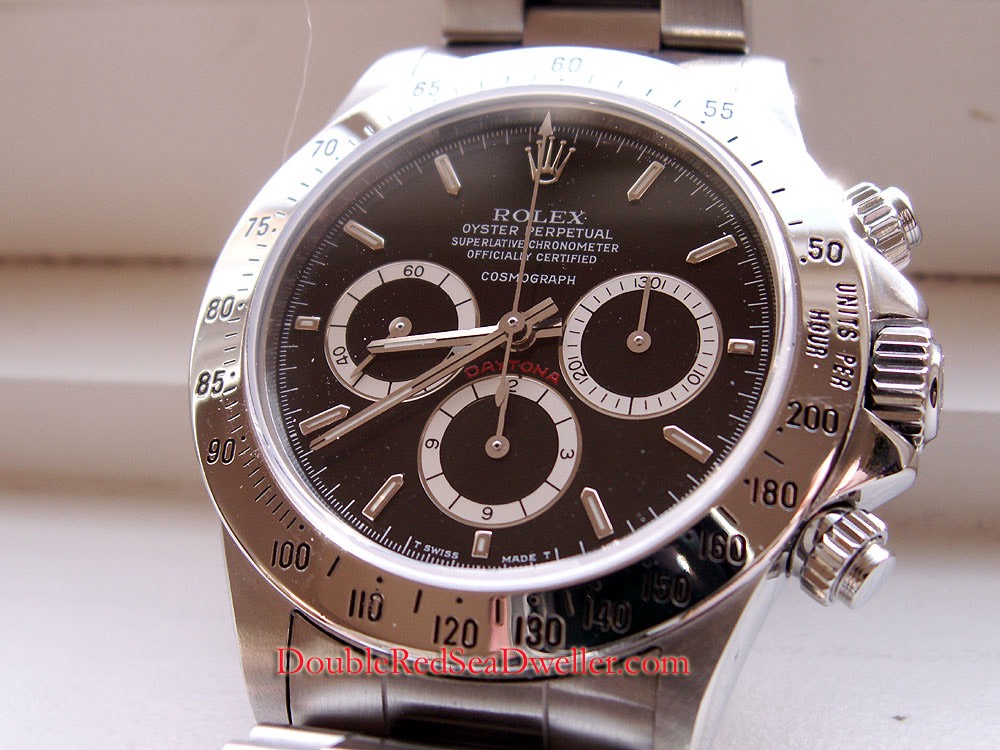
Here is another 16520 Serial R with the black dial. As you can see, the same details are present in the black dial.
Photos below by B. Lembkey

Mark II
This dial was produced early for the 16520s. The major difference on this watch was that the word “Officially Certified” was left out of the dial even though the watch was rated as a chronometer. The word “Cosmograph” was now together with the rest of the writing on the top of the dial.
The subdials contained the same characteristics as the Mark I dial. This dial configuration was also made for about one year.
Cosmograph Position
Together with top text
“Officially Certified”
Absent from dial
Subdial Characteristics
Same as Mark I
Production Duration
Approximately one year
Next 5 photos by Silverello


Mark III
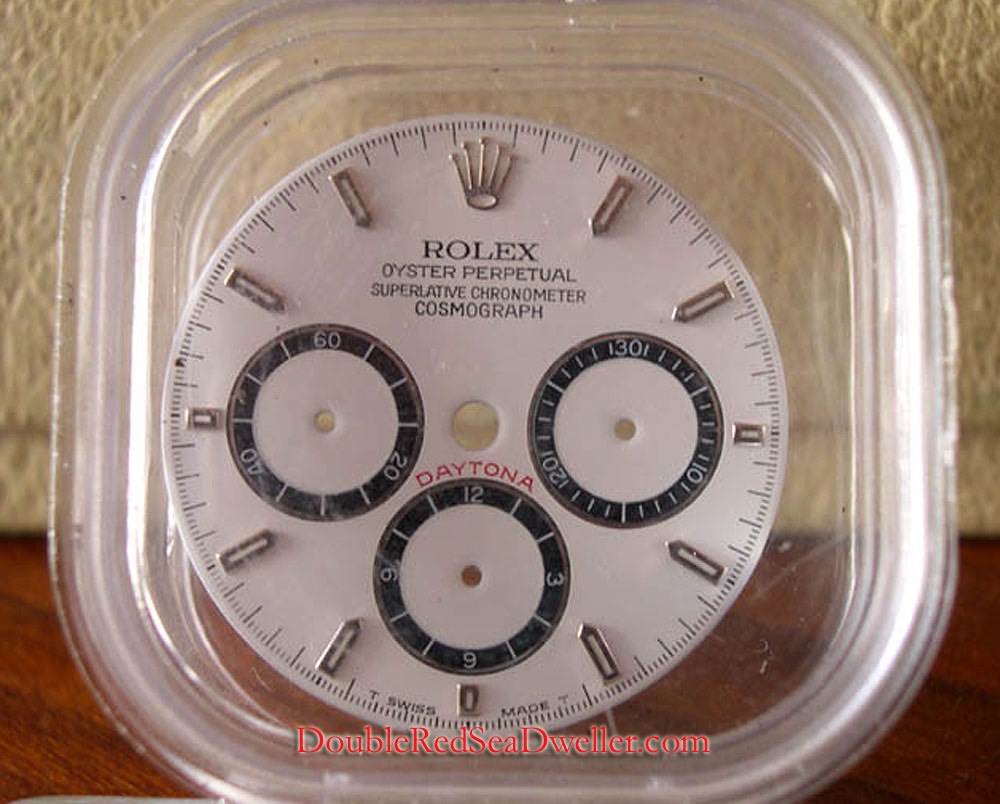
This dial is very similar to the current production dials but the subdial fonts still has the inverted “6”s in the six o’clock subdial. The words “OFFICIALLY CERTIFIED” reappeared on the dials again.
Hour Subdial (6 o’clock)
Inverted “6” still present
“Officially Certified”
Reappears on dial
Photo by Rasmus
Mark IV

Photo by C. Liotta
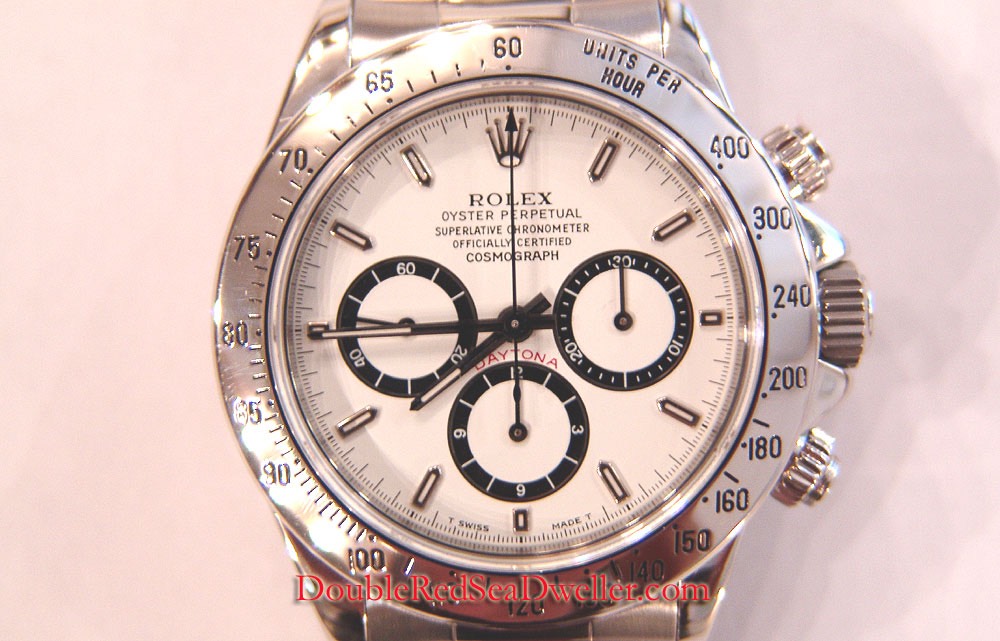
This dial was the most commonly used dial on the 16520 and therefore the one usually associated with the watch. On this dial the writing was all together and was situated slightly higher than the original dials.
The fonts in all the subdials changed to a more square and bold font which was easier to read. As mentioned above, less “hash” marks were noted in the minute totalizers.
Text Position
All together, slightly higher
Subdial Font
Square, bold — easier to read
Minute Totalizer
Three dash marks (reduced)
Status
Most common 16520 dial
Photo by Raywu

Photo by Karl
Mark V
A Serial — 1999
P Serial — 2000 (End of Production)
U Serial — Late 1998 (Some Examples)
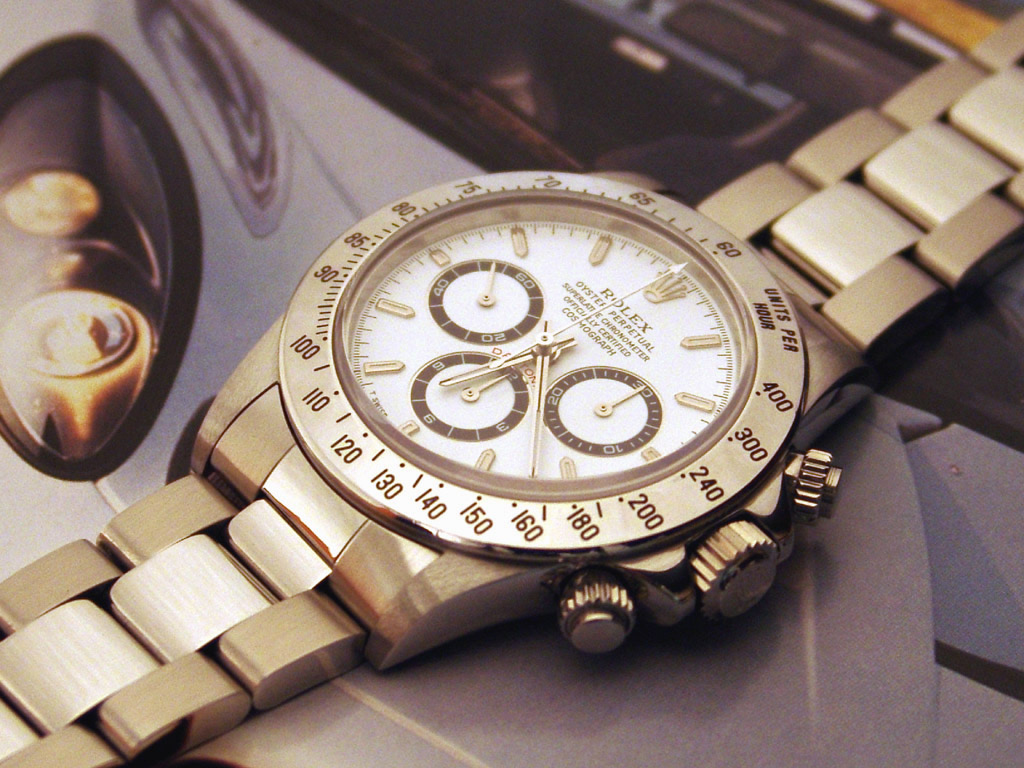
This is the same dial as the Mark IV dial but in 1999 (A) till the end of production in 2000 (P), luminova was used in the markers. Therefore, the dials did not have the “T SWISS T” and instead it was labeled as “SWISS” at the six o’clock position. The hands are also luminova.
There are some examples of (U) serial watches from late 1998 with luminova dials and SEL bracelets. These watches are correct.
Dial Difference from Mk IV
Luminova markers and hands
Six o’clock Signature
“SWISS” (not “T SWISS T”)
Production Start
A Serial — 1999
Production End
P Serial — 2000


The Movement
A zenith based movement that oscillates at 28,800 beats per minute. An absolute beauty to look at.

